
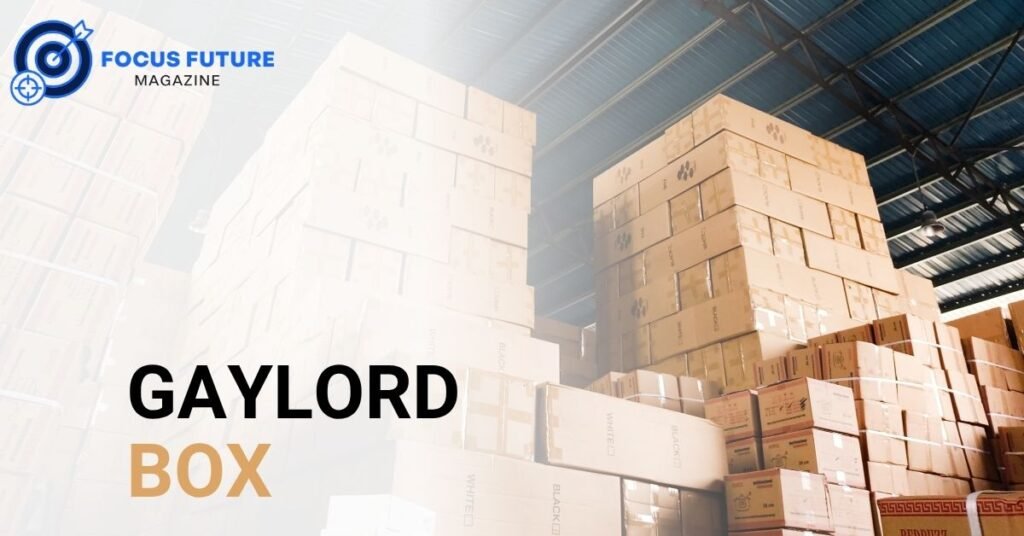
A Gaylord box is a large, pallet-sized corrugated container used to ship and store bulk goods, and yes, you should usually order multiple sizes when getting samples if you’re not 100% sure of your product’s dimensions. Flatbedding, in this context, means shipping these boxes on an open flatbed trailer instead of an enclosed truck. Let’s break down what each of these means and how to make smart decisions with them.
What Is a Gaylord Box?
A Gaylord box is a heavy-duty corrugated container built to sit on a standard pallet and hold bulk material. You may also hear it called a bulk box, pallet box, skid box, bin box, or octabin.
The name comes from the Gaylord Container Company of St. Louis, which made these boxes popular in the mid-20th century. Crown Zellerbach bought the company in 1955, but the “Gaylord” name stuck around as a generic term, much like how people say “Kleenex” instead of “tissue.”
Most Gaylord boxes sit on a 48″ x 40″ GMA pallet and come in single-wall, double-wall, or triple-wall corrugated construction. People use them to ship things like plastic pellets, scrap metal, textiles, returns, and produce. The global market for these boxes was worth $5.8 billion in 2025 and is expected to hit $9.7 billion by 2034.
Standard Gaylord Box Sizes and Dimensions
The most common Gaylord box size is 48″ x 40″ x 36″, which holds about 40 cubic feet. But the right size depends on your product’s weight and shape.
Here’s a quick breakdown of common sizes:
| Size Name | Dimensions (L×W×H) | Volume (cu ft) | Best For |
| Standard Full | 48″ × 40″ × 36″ | 40.0 | General purpose, most common |
| Tall Gaylord | 48″ × 40″ × 48″ | 53.3 | Lightweight, bulky materials |
| Short/Half-Height | 48″ × 40″ × 24″ | 26.7 | Heavy, dense materials |
| Wide Body | 48″ × 45″ × 36″ | 42.2–45.0 | Automotive pallets, appliance parts |
| Jumbo/Oversize | 58″ × 42″ × 45″ | 63.5 | Custom or oversize pallets |
If your product is heavy but small, go with a shorter box. If it’s light and bulky, a taller box makes more sense. A good rule of thumb: match the box height to your product height plus about 2 inches of clearance.
Wall Types and Weight Capacity
Wall thickness determines how much weight a Gaylord box can safely hold. There are three main types: single-wall, double-wall, and triple-wall.
| Wall Type | ECT Rating | Weight Capacity | Typical Use |
| Single-Wall | ECT-32/44 | 500–1,500 lbs | Light e-commerce, recycling |
| Double-Wall | ECT-48/51 | 1,500–3,000 lbs | Warehousing, medium parts |
| Triple-Wall | ECT-67+ | 3,000–5,000+ lbs | Export, heavy machinery, metal parts |
ECT stands for Edge Crush Test, and it measures how much force the box’s edges can handle before crushing. A higher ECT number means a stronger box. If you’re shipping anything over 3,000 pounds, triple-wall is the safer choice.
How to Order Gaylord Box Samples
Ordering samples is the smart way to avoid an expensive mistake on a bulk purchase. Most suppliers let you order a small batch — often one bundle of 5 boxes per size — before you commit to a full order.
Here’s a simple process to follow:
- Estimate your product’s dimensions and weight.
- Pick 2–3 possible sizes based on that estimate.
- Order samples in each size (usually 2–3 boxes per size).
- Load-test each sample with your actual product, not an empty box.
- Check for damage, fit, and stacking stability before placing a bulk order.
This small investment, often $30–$60, can save you from a $5,000+ mistake on a bulk order that turns out to be the wrong size.
Should You Order Multiple Sizes When Getting Samples?
Yes, order multiple sample sizes if your product dimensions vary, your weight needs are uncertain, or you’re testing a new product line. If your product size is always the same, one sample size is usually enough.
This is one of the most common questions buyers ask, and the answer depends on your situation. Here’s a simple decision guide:
| Scenario | Order Multiple Sizes? | Why |
| Uncertain product dimensions | Yes | Test fit and stacking stability |
| Consistent product size | No | One size is enough |
| Variable product weights | Yes | Compare wall types for capacity |
| New product line | Yes | Builds flexibility for the future |
| Replacing existing boxes | No | Match your current specs |
| Testing supplier quality | Yes | Compare 2–3 suppliers side by side |
A good practice is the “three-size sample rule”: order boxes in 24″, 36″, and 48″ heights, then test them with your real products before deciding. This helps you avoid two common mistakes — ordering boxes that are too short for your load or too tall and wasting space.
What Is Flatbedding in Shipping?
Flatbedding means shipping cargo on an open, flat-deck trailer that has no sides, walls, or roof. It’s used for loads that are too big, heavy, or oddly shaped to fit inside a standard enclosed trailer.
For Gaylord boxes, flatbed trailers are the go-to shipping method because the boxes are palletized and bulky. A standard 48-foot flatbed trailer can carry about 22 pallets, which works out to roughly 500–550 Gaylord boxes (assuming the common 48x40x36 size, flat-packed in bundles).
Because flatbeds are open, loads need to be secured properly. This usually means:
- Using 4–6 ratchet straps per pallet
- Adding edge protectors to prevent strap damage
- Tarping the load for weather protection
- Following DOT regulations for cargo securement
Freight for Gaylord box shipments is usually quoted FOB origin, meaning the buyer pays the freight cost. Budget somewhere between $500 and $2,000 or more, depending on distance.
Gaylord Box Pricing and Cost Factors
Gaylord box prices vary by grade, wall type, and region, with used boxes typically running $10 to $18.50 and new boxes costing $30 to $55 or more. Prices stabilized in 2024–2025 after some volatility in prior years.
As of 2025, national average pricing looks like this:
| Grade | Price Range (2025) | Condition |
| Grade A | $17.00–$18.50 | Minimal wear, 90%+ capacity |
| Grade B | $14.00–$15.50 | Visible wear, 75–90% capacity |
| Grade C | $11.50–$12.50 | Significant wear, 50–75% capacity |
Some regions run higher than average — Massachusetts averages $16.75 and Oregon averages $17.50, both well above the $10.00 national average. If your local prices seem too high, it may be worth checking prices from suppliers in lower-cost regions, even after factoring in freight.
Don’t forget hidden costs. Lids are usually sold separately and can add $8–$12 per box. Assembly labor also adds up, since Gaylord boxes ship flat-packed and need to be folded and secured on-site.
New vs. Used Gaylord Boxes: Which Should You Choose?
Choose used boxes if cost matters most and you’re shipping domestically; choose new boxes if you’re exporting, need custom branding, or want guaranteed full capacity.
| Factor | New Boxes | Used Boxes |
| Cost | $30–$55+ | $10–$18 |
| Condition | Pristine | Varies by grade |
| Lead time | 2–6 weeks | Same-day to 1 week |
| Best for | Export, branding | Cost-conscious, domestic use |
Used boxes are roughly five times cheaper than new ones, which makes them attractive for internal warehousing or one-time shipments. But always inspect used boxes for water damage, weak bottom flaps, and reduced weight capacity before relying on them for heavy loads.
Common Mistakes When Ordering Gaylord Boxes
The most common mistake is guessing on size or wall type instead of testing with real samples. This leads to box failure, wasted space, or unexpected costs.
Other frequent errors include:
- Forgetting to budget for lids, which are sold separately
- Ignoring freight costs, which can add 20–50% to the total price
- Buying used boxes without inspecting them first
- Using used boxes for international export (they often fail phytosanitary standards)
- Ordering only one sample size when product dimensions actually vary
Expert Tips for Buying Gaylord Boxes
Experienced buyers follow a few simple habits that save money and prevent problems down the line.
- Test with real weight. Load samples to 110% of expected weight before deciding on wall type.
- Negotiate grade mixes. Combining Grade A and Grade B boxes can lower your average cost per unit.
- Time your orders. Prices tend to be lower in Q1 (January–March) and higher during Q4 peak shipping season.
- Ask about pallet exchange programs. Some suppliers let you return empty pallets for credit, saving $15–$25 per pallet.
- Consider RFID for high-value goods. Adding RFID tracking costs $5–$10 more per box but helps with traceability in pharma and electronics shipments.
Latest Market Trends and Updates (2025–2026)
The Gaylord box market has been shifting toward sustainability and smart tracking technology. Corrugated fiberboard still holds 62.4% of the market, but plastic reusable containers are growing faster, at a 6.8% CAGR, thanks to closed-loop supply chains in automotive and food processing.
RFID-enabled Gaylord boxes are gaining traction for tracking high-value shipments, especially in pharmaceuticals and electronics. Meanwhile, wax-free moisture-resistant coatings are becoming popular for cold chain shipping since they protect contents without hurting recyclability.
Asia Pacific leads the global market with more than 35% revenue share, while North America holds about 34.2% ($1.98 billion) of the total market in 2025. The food and beverage industry remains the single biggest user of Gaylord boxes, making up 29.4% of total market revenue.
FAQs
What is a Gaylord box used for?
Gaylord boxes are used to ship and store bulk goods like plastic pellets, scrap metal, textiles, returns, and produce. They sit on standard pallets for easy forklift handling.
Should I order multiple sizes when getting Gaylord box samples?
Yes, if you’re unsure about your product’s dimensions or weight. Order 2–3 sizes to test fit and stacking. If your product size never changes, one sample size is usually enough.
What is flatbedding in shipping?
Flatbedding means shipping cargo on an open flatbed trailer with no sides or roof. It’s commonly used for palletized, bulky loads like Gaylord boxes.
Conclusion
A Gaylord box is simply a large, pallet-sized corrugated container built to move and store bulk goods, and picking the right one comes down to knowing your product’s size, weight, and how it will travel. When you’re not sure, ordering a few sample sizes before committing to a bulk order is the safest way to avoid costly mistakes. And once you’re ready to ship, flatbedding is the standard method for moving these boxes efficiently, since a single 48-foot trailer can carry 500+ boxes at once.