
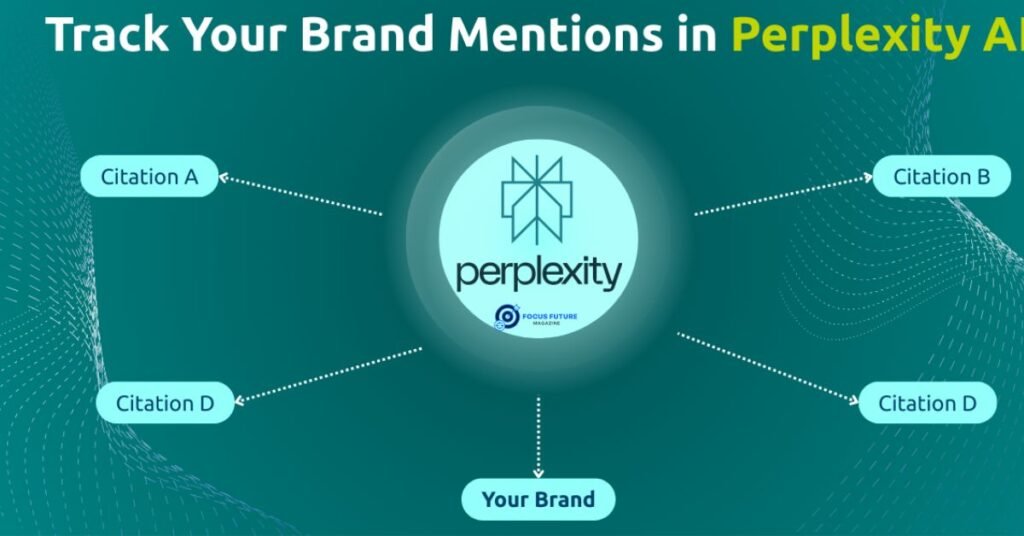
Your rankings look great. Your traffic dashboard looks fine. Your Search Console graph climbs politely to the right.
And a prospect just asked Perplexity for the best tool in your category. Your brand wasn’t in the answer.
You’ll never see that lost deal in Ahrefs. You won’t catch it in Semrush. Google Search Console has no idea it happened. These platforms were built to measure a world of ten blue links, and that world is shrinking. Buyers now type a question into Perplexity, read a synthesized answer, glance at a handful of footnotes, and decide. No click. No impression. No trace.
That’s the blind spot. Traditional SEO tools track pages. Generative engines cite sources. They’re different games, and only one of them has a scoreboard you can currently read.
A Perplexity AI brand mention monitoring tool fixes that. It shows you when Perplexity names your brand, which sources it trusts to do so, how you stack up against competitors, and where you’re invisible. For 2026, it’s the closest thing marketers have to a rank tracker for the AI era.
This guide covers what these tools do, which metrics matter, which platforms are worth your budget, and how to close the gap between what you publish and what AI actually cites.
What Is a Perplexity AI Brand Mention Monitoring Tool?
Simple definition: it’s software that automatically queries Perplexity with the prompts your customers use, records the answers, and tracks how your brand appears in them.
Mentions. Citations. Sentiment. Position. Competitors. All logged over time.
That’s LLM brand mention monitoring in its most focused form. Instead of tracking every AI model at once, you zero in on one engine that behaves very differently from the rest.
Why Perplexity Is a Special Case
ChatGPT leans heavily on training data for many answers. Perplexity doesn’t work that way. It runs on real-time Retrieval-Augmented Generation (RAG). Here’s the loop:
- A user asks a question.
- Perplexity scans the live web for relevant pages.
- It pulls the best passages.
- A language model stitches them into an answer with numbered citations.
The upside for brands: fresh content can get cited fast. No waiting for a model retrain.
The downside: citations are volatile. A competitor publishes a sharper comparison page on Tuesday and bumps you from the answer by Wednesday. A Reddit thread goes viral and suddenly shapes how Perplexity describes your product. Ask the same question twice and you may get two different source lists.
You can’t check this manually once a quarter and call it strategy. It moves daily. That’s why monitoring has to be automated, repeated, and trend-based.
A good tool does five things:
- Runs prompts on a schedule so you see patterns, not snapshots
- Captures every cited URL, not just brand names
- Scores sentiment so you know whether a mention helps or hurts
- Benchmarks competitors across identical prompts
- Surfaces the third-party sources feeding the answers
Why Traditional Trackers Fail (and What to Measure Instead)
Let’s be fair to the old guard. Ahrefs, Semrush, and Google Search Console are excellent at what they were designed for. They crawl SERPs, estimate keyword volume, and map backlinks.
Perplexity answers don’t live on a SERP.
There’s no fixed ranking for a keyword. The response is generated on demand, shaped by the exact wording of the question, and often different per session. A rank tracker sees nothing. Search Console only logs clicks that happen, and plenty of Perplexity users never click.
So the metrics change too. Forget “position 3 for keyword X.” Think presence, share, and placement.
The Core Metric: Answer Share of Voice (ASoV)
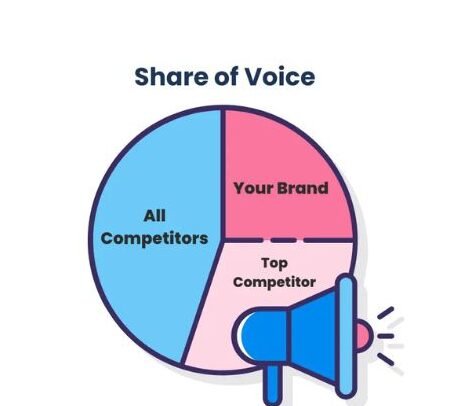
Answer Share of Voice (ASoV) is the number to anchor your reporting on. The formula is clean:
ASoV = (brand appearances in AI responses ÷ total responses) × 100
Say you track 200 category prompts in Perplexity. Your brand shows up in 46 answers. Your ASoV is 23%.
Now run the same math for your top three competitors. Suddenly you have a real market-share picture for the AI channel. You can see who owns the conversation, who’s rising, and who’s fading.
Track ASoV by:
- Prompt cluster (pricing questions, “best X for Y” queries, comparisons, how-tos)
- Competitor
- Week over week
- Persona or use case
The cluster view is where the gold hides. You might dominate “how-to” prompts and vanish on “best tool for enterprise” prompts. That’s a content roadmap handed to you on a plate.
Citation Position Matters More Than You Think
Showing up isn’t enough. Where you show up decides whether anyone visits.
Perplexity numbers its sources. Market data shows a brutal drop-off:
- Citation positions 1–6 each drive roughly 11–12% of traffic
- Position 10 and beyond falls below 0.1%
Read that twice. The top six slots share nearly the whole prize. Everything past ten is basically a ghost town.
So a second layer of tracking matters: average citation position, share of top-six placements, and how often you appear at all versus how often you appear high. A brand that’s cited in 40% of answers but always at position 11 is winning a vanity metric.
Other Metrics Worth Logging
- Sentiment: positive, neutral, or negative framing
- Co-mentions: which brands Perplexity lists alongside you
- Source domains: which sites get cited, and how often
- Citation stability: how often you hold a slot across repeated runs
- Referral traffic: visits tagged to Perplexity in your analytics
Top Perplexity Brand Monitoring Tools in 2026
The market is young and crowded. Some platforms track a dozen engines. Others go deep on one. Here’s how the leading options break down, based on current market data.
Keyword.com (AI Visibility Tracker)
Keyword.com took its rank-tracking pedigree and pointed it at generative search. The result is the AI Visibility Tracker, and it’s strongest where marketers feel the most pain: understanding why an AI says what it says.
Standout capabilities:
- AI sentiment analysis. See whether Perplexity frames your brand as a leader, a budget option, or a cautionary tale.
- Citation tracking. Log every URL Perplexity pulls from.
- PR opportunity discovery. This is the sleeper feature. The tool identifies third-party sources Perplexity trusts, which hands your PR and outreach team a target list. Want into the answer? Get onto the pages the answer already cites.
Best for: brands that want sentiment plus a direct pipeline from monitoring to outreach.
Riff Analytics
Riff Analytics is built for people who hate manual checking. It automates Perplexity checks and runs them on a recurring schedule, so your data builds itself.
Standout capabilities:
- Automated Perplexity monitoring with no copy-paste routines
- Co-mention extraction. See exactly which competitors appear beside you and how often.
- Cross-engine visibility across ChatGPT, Claude, Gemini, and DeepSeek, so you can compare Perplexity against the rest
That last point matters. A brand strong in Perplexity but weak in Gemini has a different problem than one weak everywhere. Riff makes the contrast obvious.
Best for: teams that want automation and a multi-engine view without heavy setup.
Mersel AI
Not every team has an analyst to interpret dashboards. Mersel AI knows it.
Mersel pairs managed tracking with a citation content engine. Translation: they watch the data and help produce the content that moves it. It’s a done-for-you model.
Best for: lean teams with big ambitions and small headcount. If your marketing department is two people and a freelancer, execution support beats another login.
Profound and AthenaHQ
These two sit at the enterprise end of the market.
Profound and AthenaHQ emphasize deep analytics, revenue attribution, and detailed share-of-voice benchmarking. They’re built for organizations that need to prove AI visibility ties to pipeline, brief executives with hard numbers, and monitor many products, regions, or competitors at scale.
Best for: larger companies with analytics resources and the budget to match.
Side-by-Side Comparison
| Tool Name | Best For | Core Feature |
|---|---|---|
| Keyword.com (AI Visibility Tracker) | Sentiment tracking and PR targeting | AI sentiment analysis, citation tracking, and trusted third-party source discovery |
| Riff Analytics | Automated, multi-engine monitoring | Scheduled Perplexity checks, co-mention extraction, and visibility across ChatGPT, Claude, Gemini, DeepSeek |
| Mersel AI | Lean teams needing execution | Managed tracking plus a citation content engine |
| Profound & AthenaHQ | Enterprise analytics | Revenue attribution and deep share-of-voice benchmarking |
How to Choose
Skip the feature-list arms race. Ask three questions:
- Who will act on the data? No analyst? Lean toward Mersel. Strong in-house team? Keyword.com or Riff fit well.
- Do I need Perplexity only, or every engine? Riff covers more ground. Enterprise suites go wider still.
- Do I need to prove revenue impact? If the CFO is asking, Profound or AthenaHQ speak that language.
These GEO tools vary widely in depth, so run a trial with your real prompts before you commit.
How to Optimize and Close the AI Citation Gap
Monitoring shows the problem. Now fix it.
Understand the AI Citation Gap
The AI citation gap is the distance between what your brand publishes and what AI engines actually cite about you.
Here’s the uncomfortable stat: owned content drives only about 5–10% of AI sources. The other 90–95% comes from third-party domains. Reddit threads. Review platforms. Industry forums. Listicles on publisher sites. Comparison blogs written by someone who isn’t you.
Pour all your energy into your own blog and you’re fighting for a tenth of the field.
Perplexity builds trust through consensus. If five independent sources say your product is great for small teams, it repeats that. If none mention you, it won’t invent a reason to.
Map the Sources Behind Competitor Wins
Open your monitoring tool. Pull the citation list for prompts where a rival appears and you don’t. Sort by domain.
You’ll spot patterns fast:
- The same three review sites keep surfacing
- A specific subreddit shows up repeatedly
- One industry publication’s “best of” list gets cited constantly
That’s your target list. Every recurring domain is a door you need to walk through.
Earn Presence on Trusted Third-Party Sites
Now go get mentioned where the engine already looks.
- Review platforms: Claim profiles. Collect fresh, detailed reviews from real customers.
- Reddit and forums: Contribute useful answers. Don’t spam. Genuine participation builds the kind of discussion Perplexity quotes.
- Publisher listicles: Pitch editors of the “best X” pages already being cited. Offer data, a demo, or an expert quote.
- Industry directories and associations: Boring? Yes. Frequently cited? Also yes.
Skip the shortcuts. Fake reviews and astroturfed threads get flagged, and they torch trust.
Build Question-Led Content
Perplexity users ask full questions. Your content should answer them directly.
Pull the real prompts from your monitoring data. Then build pages around them:
- Lead with the answer in the first two sentences
- Use the question as your heading
- Add original data, tables, and specifics. RAG systems love extractable facts.
- Keep claims verifiable and cite your own sources
- Refresh often. Because Perplexity pulls live, recency pays off.
Compare that with a 2,000-word essay that buries the answer in paragraph nine. The engine will skip it for a cleaner source.
Fix Negative or Inaccurate Framing
Sentiment tracking sometimes reveals Perplexity describing you wrong. Outdated pricing. A discontinued feature. A stale complaint.
Find the source feeding that claim. Update your own pages first. Then contact the third-party site with a correction request. Because the engine re-scans the live web, fixes can propagate faster than you’d expect.
Build a Weekly Rhythm
Consistency beats intensity. A simple loop works:
- Monday: Review ASoV changes by prompt cluster
- Midweek: Check new competitor citations and fresh sources
- Thursday: Ship or refresh one question-led page
- Friday: Log outreach wins and track their effect
Small, repeated actions compound. That’s how you shrink the gap.
The Verdict
Search didn’t die. It split.
One half still runs on ranked links, and your old tools handle it fine. The other half runs on synthesized answers, live retrieval, and a handful of citations that decide who gets considered. That half is growing, and it’s invisible to everything in your current stack.
Generative Engine Optimization (GEO) monitoring is how you see it. Start with a Perplexity AI brand mention monitoring tool, measure your Answer Share of Voice, study which third-party domains steer the answers, and go earn your place on them.
Pick a tool this month. Track 50 real customer prompts. Benchmark three competitors. Find your citation gap.
Brands that start measuring now will shape the answers. Brands that wait will find out what those answers say about them when the pipeline dries up.
The scoreboard exists. Start reading it.