
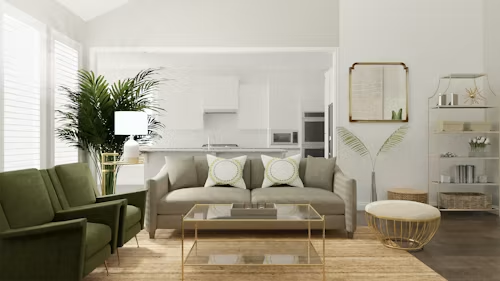
Modern living has quietly shifted away from acquiring more toward designing intentionally — homes, schedules, and habits built around what actually adds value, rather than what’s simply available.
The Rise of Intentional Minimalism
This isn’t about owning fewer things for its own sake — it’s about reducing decision fatigue and mental clutter by keeping only what serves a clear purpose, whether that’s in a wardrobe, a kitchen, or a daily routine.
Multi-Functional Spaces Are Replacing Single-Purpose Rooms
As living spaces shrink in many cities, furniture and room design increasingly serve multiple purposes — home offices that fold away, furniture that adapts between work and rest functions.
Time Design Is Getting as Much Attention as Space Design
People are applying the same intentionality to their calendars as their homes — protecting focus time, reducing unnecessary meetings, and treating rest as a scheduled priority rather than whatever’s left over.
A Practical Starting Point
Rather than overhauling an entire home or schedule at once, the most sustainable approach tends to start with one space or one weekly habit, and expand from there once it actually sticks.