
A prospect fills out a form, clicks an ad, or slides into your DMs. They are warm for minutes, not days. Then the message sits unread because your setter is asleep, in a meeting, or buried in a queue. By the time a human answers, the lead has opened three competitor tabs and cooled off.
This is the speed-to-lead problem, and it is the most expensive bottleneck in modern sales. Human appointment setters are good at conversation. They are bad at availability. They sleep. They take breaks. They get sick. And they cost real money: vendor benchmarks put a human setter at roughly $2,000 to $4,000 per month once you count salary, commissions and training.
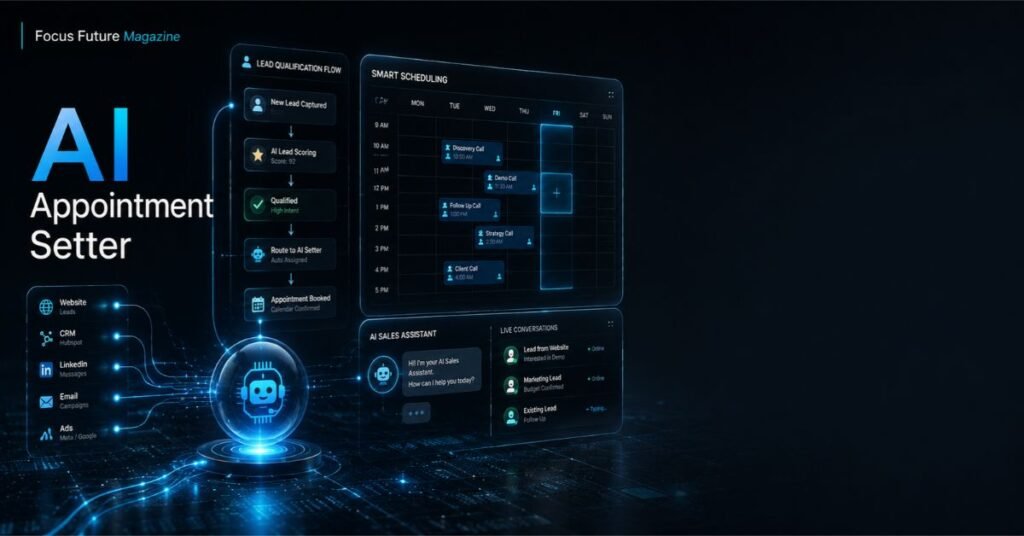
An ai appointment setter removes the gap. It replies in seconds, at 2 a.m. or during a product launch, on every channel at once. It asks your qualifying questions, filters out bad fits, and puts a confirmed slot on your calendar before the lead’s interest fades.
This guide breaks down how the technology works, which platforms lead the best AI appointment setting software 2026 shortlist, and how to deploy one without burning your brand. It also covers where each tool falls short, because every one of them has limits.
What Is an AI Appointment Setter, and How Does It Work?
An AI appointment setter is an autonomous conversational agent that takes a prospect from first contact to a confirmed sales call. No human touches the thread unless you want one to.
It works in four moves:
- Trigger. A lead sends a DM, replies to an ad, comments a keyword, submits a form or calls. The agent picks it up in seconds.
- Conversation. The agent follows your script and knowledge base. It asks about goals, budget, timeline and fit, and it answers objections in plain language.
- Qualification. It scores the lead against your rules. Good fits move forward. Poor fits get a polite exit or a nurture path.
- Booking. It reads live availability, proposes slots and books the call. Confirmation and reminders follow automatically.
The agent hooks into two layers. The first is communication channels: SMS, WhatsApp, Instagram DMs, Facebook Messenger, web chat and phone. The second is the calendar and CRM layer: Calendly, GoHighLevel and HubSpot, plus options such as Cal.com. The calendar link is what separates a real setter from a chatbot. A chatbot answers questions. A setter owns an outcome: a booked meeting.
That difference matters when you compare vendors. Ask one question first: does the tool book inside the conversation, or does it send the lead a link and hope? Every extra click costs you show-ups.
Text vs. Voice AI Setters: Choose Your Infrastructure First
Before you compare brands, pick a lane. The two categories solve different problems.
Text and DM-native setters live where leads already talk to you: Instagram, Messenger, WhatsApp, SMS and web chat. They shine for social media funnels, comment-to-DM campaigns and inbound ad traffic. The lead starts the conversation, so the setter answers fast and keeps the thread warm. Coaches, consultants and agencies running paid social get the most from this lane.
Voice AI setters are built on speech infrastructure. They answer inbound calls and place outbound calls at call-center scale. The deciding factor is latency: the gap between a caller finishing a sentence and the agent replying. Long pauses break the illusion fast. This is where autonomous AI voice agents earn their keep, especially for outbound prospecting lists, missed-call recovery and high-volume phone lines.
A simple rule works for most teams:
- Leads arrive as messages or form fills: start with text.
- Revenue depends on phone conversations or outbound dials: start with voice.
- You run both: pair a text setter with a voice layer, and keep one CRM as the source of truth.
Do not buy voice because it sounds futuristic. Buy it when your buyers actually pick up the phone.
Top AI Appointment Setter Platforms in 2026
This shortlist covers the best AI appointment setting software 2026 has to offer across text, CRM-native and voice. Most feature claims below come from vendor pages and review sites, so treat them as a starting point and run a pilot on your own funnel before you commit.
SetSmart: Best Overall AI Text Setter
SetSmart earns the top text slot because it does one job and does it cleanly. It answers DMs on Instagram, Facebook Messenger and WhatsApp through official Meta APIs, so one setter covers every social channel where leads message you.
Three features set it apart:
- In-chat booking. The AI proposes open slots and books directly inside the conversation. It syncs with Calendly, GoHighLevel, Cal.com and iClosed, so the lead never gets bounced to an external link.
- Comment-to-DM triggers. A keyword comment on a post, reel or ad opens a private conversation that ends in a booked call.
- Voice notes. It can send and understand voice notes, which matters for coaches and creators selling on personal trust.
The trade-off is volume pricing. Plans carry a message allowance, then usage-based top-ups. A chatty funnel or a launch week can lift the bill, so model your monthly message count before you sign.
Setter AI and Appointwise: Best for Agencies and Fast Inbound Response
These two share a lane but start from different places.
Setter AI is a text-based setter built around speed to lead. It promises a follow-up within about 10 seconds of a new lead, working from forms, landing pages and ad leads, and it contacts them over channels such as WhatsApp, SMS and email. It books into Calendly and connects to thousands of apps through Zapier. Pricing is tiered and has been reported as starting in the tens of dollars per month, with higher tiers for volume, so confirm current plans on the vendor site. If your leads start at a form, not a DM, Setter AI fits naturally. A DM-native tool starts at the message the lead already sent. Setter AI starts at the form.
Appointwise is the agency pick. It runs inside GoHighLevel, which is its main advantage and its main limit. Agencies managing many client sub-accounts get a setter that sits on top of the calendars, pipelines and multi-channel inbox they already use. It qualifies leads, follows up on a sequence and books calls on the GoHighLevel calendar. The catch is dependency: you need a GoHighLevel subscription, and the platform is tuned for agency workflows, not solo creators.
Retell AI and Synthflow: Leaders in AI Voice Appointment Setting
These are the names to know for autonomous AI voice agents.
Retell AI is a developer-friendly voice platform. Its agents use built-in actions to check availability and book appointments, with Cal.com as a native calendar connection, and it supports call transfers with summarized context for warm handoffs. Retell focuses on low latency, with the vendor citing sub-second response times, so verify the real delay in your own test calls. It also extends across SMS and chat, so transfers can move between channels.
Synthflow targets teams that want a no-code build. You design the agent, connect a live calendar and deploy it for inbound answering or outbound qualification. It integrates with Google Calendar, Calendly and Cal.com, supports human transfer, and is white-label friendly, which suits agencies reselling voice agents to clients.
Choose Retell when you want deep control and developer-grade tooling. Choose Synthflow when speed of build matters more than customization.
CloseBot: The Agentic Option Built Inside Your CRM
CloseBot does not ask you to move. It plugs into your existing CRM and takes over the chat channels already running there, including HighLevel and, as its rollout has progressed, HubSpot. You build job flows with a drag-and-drop editor, create reusable AI personas and ground them in a custom business knowledge base. The agent handles qualification, rescheduling and CRM field updates, and it supports conversations in 22 languages.
Two caveats. CloseBot is a text product, not a voice engine. And HubSpot support has been rolling out over time, so confirm exactly which HubSpot channels and calendars work today.
Head-to-Head Comparison Matrix
Use this table to shortlist automated speed-to-lead response tools by channel and calendar fit. Synthflow is covered in the voice breakdown above and shares Retell’s lane.
| Tool Name | Primary Channel | Best For | Calendar Integration |
|---|---|---|---|
| SetSmart | Instagram, Facebook Messenger, WhatsApp DMs | Coaches, consultants and agencies selling through DMs | Calendly, GoHighLevel, Cal.com, iClosed (in-chat booking) |
| Setter AI | WhatsApp, SMS, email, web chat | Fast response to form, ad and landing-page leads | Calendly, plus Zapier connections |
| Appointwise | SMS and multi-channel inside GoHighLevel | Agencies running many client sub-accounts | GoHighLevel calendars |
| Retell AI | Voice (inbound and outbound), with SMS and chat | Call-center-scale phone setting and developer-built voice agents | Cal.com (check availability and book) |
| CloseBot | Existing CRM chat channels (text) | Agencies and teams that want the AI inside HighLevel or HubSpot | HighLevel and HubSpot calendars |
Read the table by asking two questions. Where do your leads show up? And where does your calendar live? The first answer picks the channel. The second answer kills most options.
How to Set Up an AI Appointment Setter: The 5-Step Blueprint
The tool matters less than the setup. A mediocre platform with sharp instructions beats a great platform with vague ones. Follow this sequence.
Step 1: Formulate Strict Operational Instructions
Write the agent’s job description like you would for a new hire. State its goal (book a qualified call), its tone, its length limits and what it must never do. Ban invented pricing, fake urgency and promises you cannot keep. Add a handoff rule: when a lead is angry, confused or asks for a human, the agent stops and alerts your team.
Step 2: Configure Channel Trigger Rules
Decide what wakes the agent up. Set trigger rules per channel: first inbound DM, keyword comment on a post, new form submission, missed call, or a tagged contact in the CRM. Add timing rules too. Reply within seconds on inbound leads, then follow up on a set schedule if the lead goes quiet. Cap follow-ups so you never spam.
Step 3: Upload Brand Knowledge Base Documents
Feed the agent your real material: service descriptions, pricing logic, FAQs, objection answers, case studies and policies. Use short, clean documents. Remove outdated offers first. The agent will repeat whatever you upload, including your mistakes.
Step 4: Set Lead Qualification and Disqualification Criteria
Define the questions that matter: budget, timeline, decision-maker status, location, company size. Then write both outcomes. Qualified leads get slots. Disqualified leads get a respectful redirect, such as a resource or a different offer. Without disqualification rules, the agent fills your calendar with tire-kickers and your closers lose trust in it.
Step 5: Connect Two-Way Calendar Syncing
Link Calendly, GoHighLevel, HubSpot or Cal.com with two-way sync. The agent must read live availability and write confirmed bookings back, or you will get double bookings. Check time-zone handling, buffer times and rescheduling flows. Then test with at least 20 mock conversations, including rude, vague and off-topic leads, before you go live.
After launch, review transcripts weekly. Track three numbers: response time, qualification rate and booked-call show rate. Tighten the instructions where conversations stall.
The Verdict: Automate the Top of Your Funnel
The top of the funnel is where most revenue quietly disappears. Slow replies, missed DMs and dropped follow-ups cost you deals you already paid to generate. An AI appointment setter fixes that layer first, and it does so at a price that undercuts a human setter by a wide margin.
Here is the buying logic in plain terms:
- Selling through Instagram, Messenger or WhatsApp? Start with SetSmart.
- Leads arrive through forms and ads? Test Setter AI for its fast first reply.
- Running an agency inside GoHighLevel? Look at Appointwise and CloseBot.
- Living in HubSpot? Confirm CloseBot’s current HubSpot support before you commit.
- Winning deals on the phone? Pilot Retell AI or Synthflow.
Do not chase a perfect tool. Pick the one that matches your channel and calendar, run a 30-day pilot on real leads, and measure response time, qualification rate and booked-call show rate against your current baseline.
Going into 2027, instant response is becoming the default expectation, not a differentiator. Teams that automate now collect the data, refine the scripts and train the closers around it while competitors are still arguing about whether to start. Your closers should spend their hours on live conversations with qualified buyers. Let the machine handle the first hundred messages.