
A crushed concrete driveway is a smart, low-cost choice for most homes. It costs 20–50% less than virgin gravel, asphalt, or new concrete, drains well, and lasts 15–25 years with proper care. Below, you’ll find what it costs, which grade to buy, and how to install and maintain it.
What Is a Crushed Concrete Driveway?
A crushed concrete driveway uses recycled concrete aggregate (RCA) as its surface, its base, or both. RCA comes from old sidewalks, curbs, foundations, and parking lots. It is crushed and screened into set sizes.
You may also see it called recycled crushed concrete or broken concrete. It works for homes and for commercial lots.
Why Choose Crushed Concrete for Your Driveway?
Most people choose it for four reasons: low cost, good drainage, durability, and eco-friendliness.
- Cost: It is cheaper than most other materials.
- Drainage: It is porous, so water drains through instead of pooling.
- Strength: Angular pieces lock together and harden over time.
- Green choice: It keeps demolition waste out of landfills.
In 2026, more homeowners are choosing it because virgin aggregate keeps getting more expensive.
Crushed Concrete Driveway Cost (2026 Pricing)
Sources put the average installed cost at about $1,200 for a one-car driveway and $2,400 for a three-car driveway. Material runs 6–14 per ton, or 20–50 per cubic yard. Per square foot, expect about 1.50–8 for material and 4–12 installed.
| Driveway Size | Square Feet | Cubic Yards (6″ deep) | Material (at $35/yd) | Installed Cost |
| Single-car | 240 | ~4.4 | ~$154 | 600–1,200 |
| Two-car | 480 | ~8.9 | ~$312 | 1,200–1,800 |
| Three-car | 720 | ~13.3 | ~$466 | 1,800–2,400 |
| 100′ × 12′ | 1,200 | ~22.2 | ~$777 | 2,400–4,000 |
Prices rose slightly in 2026 because of fuel and equipment costs. Crushed concrete is still 20–40% cheaper than virgin aggregate. Get several local quotes, and order 10–15% extra material for settling and edge loss.
Pros and Cons of Crushed Concrete Driveways
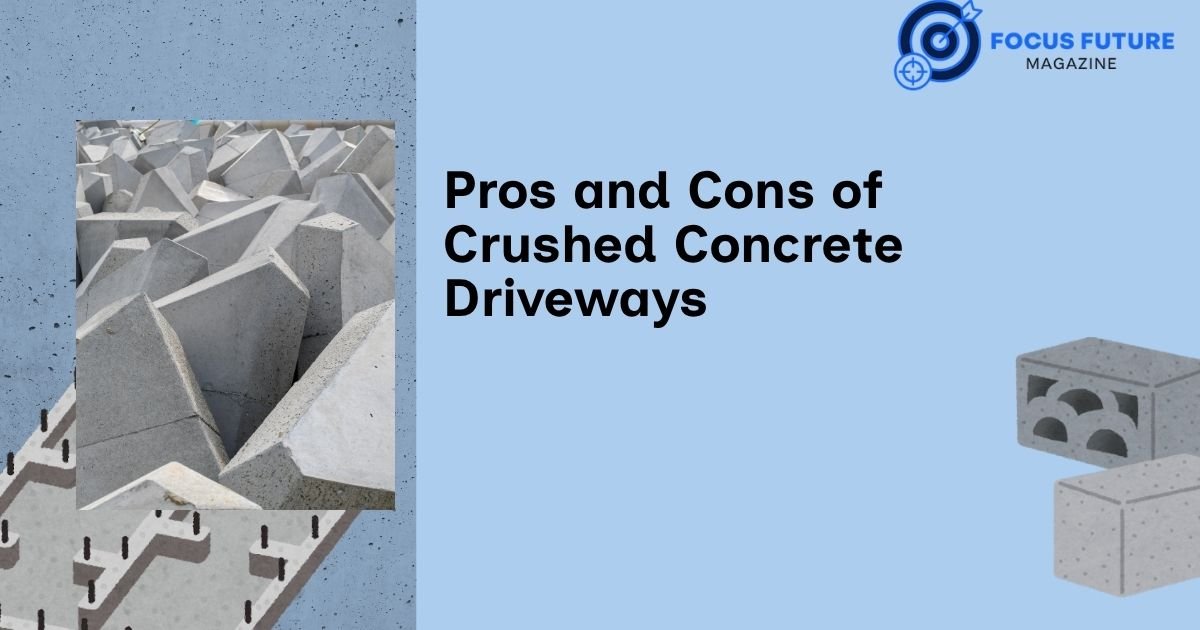
The main pros are low cost, drainage, and a green footprint. The main cons are dust, weeds, and uneven settling.
Pros:
- 20–50% cheaper than many options
- Excellent drainage
- Low maintenance
- Works in freeze-thaw climates when installed well
- Eligible for LEED credits
Cons:
- Dust when dry
- Weeds without fabric underneath
- Gray, industrial look
- Material can migrate without edging
- About 70–90% as strong as new concrete
Some users say sharp edges wear tires. That is anecdotal, and a fine 3/4″ minus surface layer helps.
Crushed Concrete vs. Gravel, Asphalt, and Concrete
Crushed concrete beats gravel on cost and lifespan and beats asphalt on drainage. New concrete lasts longer but costs much more.
| Feature | Crushed Concrete | Gravel | Asphalt Millings | New Concrete |
| Installed cost per sq ft | 1.50–8 | 2–4 | 3–6 | 6–20 |
| Lifespan | 15–25 yrs | 10–20 yrs | 10–15 yrs | 25–50 yrs |
| Maintenance | Low | High | Medium | Medium |
| Drainage | Excellent | Good | Poor | Poor |
| Dust | Moderate | Low | Low | None |
Angular crushed concrete locks together better than round gravel. Recycled asphalt is a growing rival, with a smoother surface but less drainage.
Best Grades of Crushed Concrete for Driveways
For the surface, use 3/4″ minus. For the base, use 1-1/2″ to 2″ pieces. Names vary by region.
| Grade | What It Is | Best Use |
| 21AA (Michigan) | 3/4″ minus with fines | Driveway surface |
| 6A (Ohio/PA) | 3/4″ minus | Driveway surface |
| 3/4″ minus | Pieces up to 3/4″ plus dust | Smooth top layer |
| 1-1/2″ to 2″ | Larger aggregate | Base layer |
Don’t mix crushed concrete with round gravel. It weakens the interlock.
How to Install a Crushed Concrete Driveway (Step-by-Step)
The key is a firm subgrade and compaction in thin, damp layers. Here are the steps:
- Clear vegetation, topsoil, and debris.
- Compact the subgrade.
- Lay geotextile fabric.
- Add 4–6 inches of 1-1/2″ to 2″ base.
- Compact in 2–3 inch lifts, watering each one.
- Add 2–3 inches of 3/4″ minus.
- Grade for drainage.
- Compact the surface with several passes.
- Install edging.
- Wait 6–12 months before heavy use.
Use a plate compactor with at least 5,000 lbs of centrifugal force, or a 1-ton roller. Skip rainy days. Wet ground makes compaction messy.
How Thick Should a Crushed Concrete Driveway Be?
Plan on 4–6 inches for light residential traffic. Heavier loads or weak soil need 8–12 inches total, including the base.
Under 4 inches wears fast and ruts easily. A two-layer system works best: a coarse base topped with 3/4″ minus.
Drainage and Slope Requirements
A crushed concrete driveway needs a slope of 1/4″ per foot, which is about 2%. Make the center higher than the sides, like a gentle crown.
Always slope water away from the house. Send runoff to a swale or culvert. Don’t over-compact, because that reduces permeability and causes puddles.
Does Crushed Concrete Harden Over Time?
Yes. Leftover cement in the material reacts with water and binds the pieces together. This self-cementing takes about 6–12 months.
Heavy driving too early can cause ruts, so go easy at first.
Will Weeds Grow Through a Crushed Concrete Driveway?
Yes, weeds can grow through the gaps. Fabric stops most of them.
- Lay geotextile fabric under the aggregate.
- Apply a pre-emergent herbicide.
- Try a salt, water, and soap mix.
Fabric also keeps stone from sinking into soft soil.
Does Crushed Concrete Produce Dust?
Yes, especially when dry. Three things reduce it. Use 3/4″ minus on top, water while compacting, and mist the surface in dry spells.
Crushed Concrete Driveway Maintenance Tips
Upkeep is simple. A little attention each year keeps the surface smooth.
- Top-dress with 1–2 inches of 3/4″ minus every 1–2 years.
- Grade once or twice a year to restore the crown.
- Remove leaves and branches.
- Fill potholes, water them, and compact.
- Check edging for damage.
How Long Does a Crushed Concrete Driveway Last?
Expect 15–25 years, and up to 30 with good care. Crusher run and gravel last 10–20 years. New concrete lasts 25–30 years.
It handles freeze-thaw cycles well. In winter, avoid heavy de-icing salt, and plow carefully so the blade doesn’t catch the edges.
Is Crushed Concrete Eco-Friendly? (LEED & Sustainability)
Yes. It keeps construction and demolition waste out of landfills. It needs only crushing, not quarrying or kiln firing, so its carbon footprint is lower.
It can also earn LEED credits under Materials & Resources. LEED v4.1 documentation is clearer on eligibility, and more residential projects are using it. Buying locally cuts transport emissions further. The EPA, NRMCA, and USGBC all publish helpful guidance.
Common Mistakes to Avoid
Most failures come from skipped prep.
- Skipping subgrade compaction
- Leaving out geotextile fabric
- Using less than 4 inches of material
- Grading too flat or toward the house
- Skipping edge restraints
- Compacting dry material
- Buying from unverified suppliers
Expert Tips for a Long-Lasting Driveway
Use the two-layer system, compact in thin lifts, and set edging before the final compaction. Crown the driveway, top-dress yearly, and let it cure.
If looks matter, put decorative gravel or asphalt millings over a crushed concrete base.
Where to Buy Crushed Concrete Near Me
Start with local landscape supply yards and aggregate suppliers. Search for “21AA,” “6A,” or “3/4″ minus crushed concrete.” More suppliers now operate in Texas, Michigan, and Pennsylvania.
Ask how they screen for rebar, asphalt, and wood. Then look over the load before it’s spread.
Conclusion
A crushed concrete driveway gives you solid value. It is affordable, drains well, and gets stronger with time. Compaction, drainage, and edging matter most.
Get a few quotes, choose the right grade, and plan for a 6–12 month settling period. You’ll have a durable driveway that also helps the environment.
FAQs
Is crushed concrete good for driveways?
Yes. It is stronger than ordinary gravel, drains better than asphalt, and costs far less than poured concrete.
How much does a crushed concrete driveway cost?
Average installed costs run about $1,200 for one car and $2,400 for three. Material is 6–14 per ton or 20–50 per yard.
How long does it last?
Usually 15–25 years, and up to 30 with good maintenance.
Can you put crushed concrete over existing gravel?
Yes, but fix drainage first and compact each layer well.
Does crushed concrete contain rebar or metal?
It can, if the supplier does a poor job. Buy from reputable yards that screen their loads, and inspect each delivery.
Is crushed concrete slippery when wet?
Its angular surface grips well when compacted. Loose, thick fines can get muddy, so keep the surface graded and drained.
What is the difference between crushed concrete and crusher run?
Crushed concrete is recycled. Crusher run is virgin quarried stone.
Can you seal a crushed concrete driveway?
Most sources focus on top-dressing and grading rather than sealing. Check with your supplier first.