
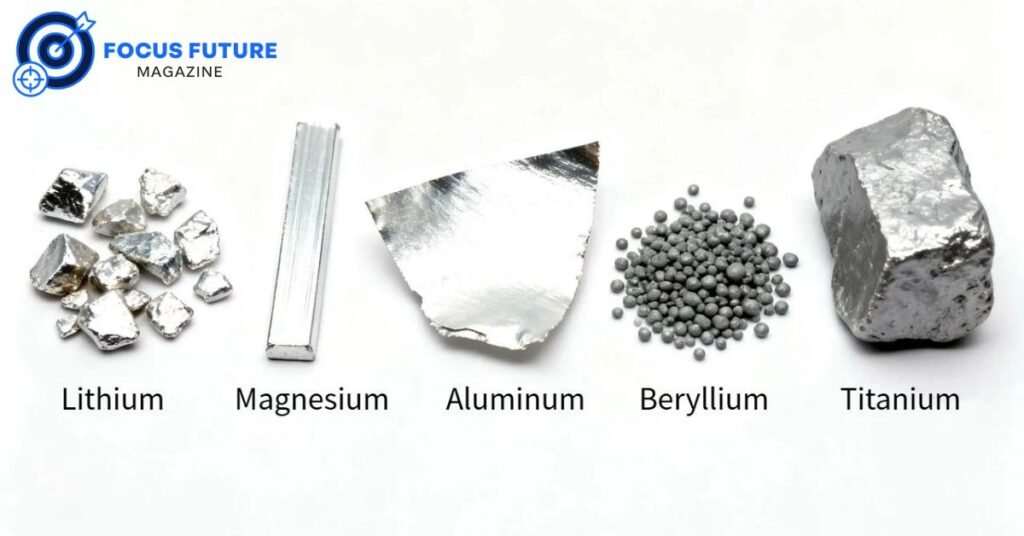
So, what is the lightest metal? The short answer is lithium, with a density of about 0.534 grams per cubic centimeter — so light it actually floats on water. But if you’re asking about a metal you can build with, the answer changes to magnesium, the lightest metal used for structural parts, at roughly 1.74 g/cm³. Both answers are correct; they just address two different questions, and understanding the difference matters if you’re picking a material for a real project.
This guide breaks down exactly what is the lightest metal in the periodic table, why lithium can’t be bolted into an airplane wing, and why magnesium ends up in aerospace housings, car parts, and drones instead. You’ll also find the latest 2025–2026 production numbers, a full density comparison table, and a simple framework for choosing the right lightweight metal for your own application.
What Is the Lightest Metal?
The lightest metal is lithium. It sits at the top-left corner of the periodic table as an alkali metal, and its density of ~0.534 g/cm³ makes it less than half as dense as water. No other naturally occurring metal comes close. When people ask what is the lightest metal on Earth, lithium is the scientifically correct answer, and it isn’t a close contest.
Lithium is soft enough to cut with a kitchen knife and reactive enough that it has to be stored under oil or in a sealed, inert atmosphere to keep it from reacting with moisture in the air. That combination of extreme lightness, softness, and reactivity is exactly why lithium never shows up as a structural building material, even though it technically answers the question of what is the lightest metal in existence.
Lithium: The Lightest Elemental Metal
Density and Key Properties of Lithium
Lithium’s density of about 0.534 g/cm³ is roughly half the density of water, which is why a chunk of lithium metal floats and even fizzes on the surface as it reacts. It has a low melting point (around 180°C), high electrochemical potential, and excellent conductivity — properties that matter far more to battery engineers than to construction engineers.
Here’s a quick look at how lithium compares to other very light elements:
| Metal | Density (g/cm³) | Structural Use? | Primary Application |
|---|---|---|---|
| Lithium | 0.534 | No | Batteries, ceramics, lubricants |
| Magnesium | 1.74 | Yes | Aerospace, automotive, drones |
| Aluminum | 2.70 | Yes | Aircraft, packaging, construction |
| Titanium | 4.43–4.82 | Yes | Aerospace, medical implants |
| Beryllium | 1.85 | Limited/niche | Aerospace, defense, optics |
Why Lithium Isn’t Used Structurally
If lithium is the answer to what is the lightest metal, why don’t we build anything out of it? Three reasons: reactivity, softness, and corrosion. Lithium reacts vigorously with moisture and oxygen, corroding almost immediately when exposed to normal air. It’s also mechanically weak and can be scratched or deformed with very little force, which rules it out for any load-bearing part.
Instead, lithium’s real value shows up in chemistry, not construction. About 88% of global lithium production in 2025 went into batteries, powering everything from smartphones to electric vehicles. The rest goes into ceramics, glass, industrial lubricants, and some pharmaceutical applications. So while lithium wins the title when someone asks what is the lightest metal, its practical role is almost entirely electrochemical rather than structural.
What Is the Lightest Structural Metal?
Magnesium is the answer once you shift the question from “what is the lightest metal” to “what is the lightest metal I can actually build with.” At about 1.74 g/cm³, magnesium is roughly three times denser than lithium, but it’s still remarkably light — about 34% lighter than aluminum and around 75% lighter than steel — while having enough strength, stiffness, and workability to serve in real engineering parts.
This is the distinction competitors often blur: lithium answers what is the lightest metal in a scientific sense, while magnesium answers the practical, engineering version of that same question.
Magnesium: The Lightest Structural Metal
Density and Key Properties of Magnesium
Pure magnesium has a density of roughly 1.74 g/cm³, though commercial alloys like AZ31B and AZ91 range between about 1.74 and 1.81 g/cm³ depending on their alloying elements. Magnesium alloys offer good machinability, decent strength-to-weight ratios, and reasonable castability, which is why they’ve become a go-to option whenever engineers need to shed weight without giving up structural integrity.
Magnesium does have a well-known weak point: corrosion resistance. Pure magnesium corrodes relatively easily in humid or salty environments, so manufacturers typically apply protective coatings or use corrosion-resistant alloys to extend part life. Fine magnesium powder and chips are also flammable, so manufacturing facilities that machine magnesium follow specific fire-safety protocols, even though solid magnesium parts themselves are safe under normal handling.
Where Magnesium Is Used (Aerospace, Automotive, Drones)
Once you know magnesium is the answer to what is the lightest metal for structural applications, its use cases make a lot of sense. In aerospace, magnesium alloys go into gearbox housings, transmission cases, engine mounts, and interior components on aircraft and helicopters. The aerospace magnesium alloys market was valued at around $1.33 billion in 2024 and continues to grow at roughly 8% annually, driven directly by demand for lighter aircraft and drones.
In the automotive industry, magnesium shows up in die-cast components like steering wheel frames, seat structures, and transmission housings, all in the name of shaving off weight to improve fuel efficiency or EV range. Drone manufacturers use magnesium alloys for frames and housings where every gram counts, and some newer applications include magnesium-based seawater batteries for underwater drones and magnesium metal 3D printing for custom lightweight parts.
Lightweight Metals Compared: Mg, Al, Ti, Be, Al-Li
Knowing what is the lightest metal overall (lithium) and what is the lightest structural metal (magnesium) is only the first step. In practice, engineers usually pick from a short list of lightweight metals and alloys, each with its own trade-offs:
| Metal/Alloy | Density (kg/m³) | Relative Strength | Cost Tier | Best-Fit Applications |
|---|---|---|---|---|
| Magnesium alloy (AZ31B) | ~1,770 | Moderate | Low–Mid | Aerospace housings, automotive castings |
| Aluminum alloy | ~2,700 | Good | Low | General aerospace, construction, packaging |
| Titanium alloy | ~4,500 | Excellent | High | High-stress aerospace, medical implants |
| Beryllium | ~1,850 | Very high (stiffness) | Very High | Aerospace, defense, optics (niche) |
| Aluminum-lithium alloy | ~2,500–2,600 | Good, improved stiffness | High | Aircraft fuselages, fuel tanks |
Aluminum-lithium alloys deserve a special mention here. By blending a small amount of lithium into aluminum, manufacturers get a material that’s noticeably lighter and stiffer than standard aluminum, which is why these alloys are used in modern aircraft fuselage and fuel tank structures. It’s a clever middle-ground answer to the question of what is the lightest metal you can practically build a plane out of.
How Much Weight Can You Save vs Aluminum and Steel?
Once you understand what is the lightest metal for a given job, the next question is usually: how much weight does switching actually save? Magnesium is about 34% lighter than aluminum and roughly 75% lighter than steel by volume. In practical terms, replacing a steel bracket with an equivalent magnesium part can cut that component’s weight by more than half, which adds up quickly across an entire vehicle or aircraft.
For example, automotive engineers who swap steel transmission housings for magnesium versions often report weight reductions in the range of 20–35% for that specific part, depending on design constraints. Aerospace teams see similar gains when replacing aluminum brackets and housings with magnesium equivalents, which is part of why the aerospace magnesium alloys market keeps expanding.
Is Lithium the Lightest Metal?
Yes. Lithium is the lightest metal in the entire periodic table, full stop. There’s no other naturally occurring metal with a lower density. When someone asks what is the lightest metal without any other context, lithium is the technically accurate, scientifically verified answer, backed by its measured density of 0.534 g/cm³.
Which Metal Has the Lowest Density?
Lithium has the lowest density of any metal, at approximately 0.534 g/cm³. For comparison, magnesium comes in at 1.74 g/cm³, aluminum at 2.70 g/cm³, and titanium between 4.43 and 4.82 g/cm³. This density ranking is exactly why lithium, not magnesium, is the correct answer whenever the question is purely about density rather than practical usability.
Does Lithium Float on Water?
Yes, lithium floats on water. Water has a density of about 1 g/cm³, and lithium’s density of 0.534 g/cm³ is roughly half that, so a piece of lithium metal will sit on the surface rather than sink. It won’t float peacefully for long, though — lithium reacts with water, producing hydrogen gas and lithium hydroxide, and the reaction can generate noticeable heat and fizzing.
Why Is Lithium Used in Batteries?
Lithium is used in batteries because of its extremely low atomic weight and high electrochemical potential, which lets it store a lot of energy relative to its weight. That’s a major reason lithium keeps coming up whenever someone searches what is the lightest metal — its lightness directly translates into higher energy density for the batteries that power phones, laptops, and electric vehicles.
Global demand reflects this: about 88% of the roughly 290,000 metric tons of lithium mined globally in 2025 went into battery production, according to USGS data, up 31% from 2024. China currently processes around 68.8% of the world’s lithium into battery-grade material, making it the dominant hub for turning raw lithium into usable battery components.
Is Magnesium Lighter Than Aluminum?
Yes, magnesium is lighter than aluminum. Magnesium’s density of about 1.74 g/cm³ makes it roughly 34% lighter than aluminum’s 2.70 g/cm³. That weight advantage is a major reason engineers reach for magnesium instead of aluminum when every gram matters, even though aluminum remains more corrosion-resistant and, in many cases, cheaper and easier to source.
What Are the Safety and Handling Risks?
Both of the metals commonly linked to the question of what is the lightest metal come with handling considerations. Lithium reacts strongly with water and moist air, so it’s stored under mineral oil or in dry, inert environments, and it should never be handled with wet hands or near water sources. Because of this reactivity, lithium fires (including in lithium-ion batteries) require special extinguishing agents rather than water.
Magnesium, on the other hand, is safe as a solid block or finished part under normal conditions. The real risk comes from magnesium powder, shavings, or fine chips generated during machining — these are flammable and can ignite easily, so machine shops working with magnesium typically use specialized dust collection, avoid sparks, and keep class D fire extinguishers on hand. Solid magnesium components used in cars, drones, and aircraft don’t pose this risk once they’re manufactured and coated.
Latest Trends: Lithium Production and Magnesium in Aerospace
The numbers around what is the lightest metal and its structural counterpart have shifted quickly in the past two years. According to the USGS Mineral Commodity Summaries 2026, global lithium mine production (excluding the U.S.) reached about 290,000 metric tons in 2025, a 31% jump from roughly 222,000 tons in 2024. That surge is being driven almost entirely by battery demand, with EV manufacturing as the biggest single driver.
On the structural side, the aerospace magnesium alloys market was valued at approximately $1.33 billion in 2024, and industry reports project continued growth at close to an 8% compound annual rate, fueled by lightweighting efforts in aircraft, helicopters, satellites, and drones. Newer magnesium alloys also offer improved corrosion resistance compared to older formulations, expanding their use into transmissions, gearboxes, interior components, and unmanned aerial vehicles. On the emerging-technology front, magnesium seawater batteries are being explored for underwater drones, and magnesium metal 3D printing is starting to open up new possibilities for custom lightweight parts that were previously hard to manufacture with traditional casting.
How to Choose the Right Light Metal for Your Application
Once you know the basic answer to what is the lightest metal, choosing the right material for an actual project comes down to a handful of practical questions:
- Is the part load-bearing? If yes, rule out pure lithium immediately — it’s simply too soft and reactive for structural duty.
- What’s the operating environment? Humid or corrosive environments favor aluminum or coated magnesium over uncoated magnesium.
- How much weight reduction do you actually need? If you need the absolute lightest structural option, magnesium usually wins; if corrosion resistance matters more than the last few percent of weight savings, aluminum may be the safer choice.
- What’s your budget and volume? Magnesium and aluminum are generally more affordable and easier to source at scale than titanium or beryllium, which are reserved for high-performance or niche applications.
- Do you need extra stiffness? Aluminum-lithium alloys or titanium may be worth the added cost if stiffness and fatigue resistance are critical.
Rather than choosing based on density alone, most experienced engineers use “specific strength” — strength divided by density — as the real decision metric, since it captures how much load a material can handle per unit of weight, not just how light it is.
Conclusion
To sum it up: what is the lightest metal? Lithium, at 0.534 g/cm³, is the lightest metal in the periodic table and the lightest metal overall. But if you need something you can actually build with, magnesium, at about 1.74 g/cm³, is the lightest practical structural metal, and it’s the one you’ll find in aircraft parts, automotive castings, and drone frames.
Both answers to what is the lightest metal are useful depending on context — lithium for chemistry and batteries, magnesium for engineering and structure. With lithium production climbing sharply and magnesium’s role in aerospace lightweighting continuing to expand through 2026, understanding this distinction isn’t just academic trivia; it’s genuinely useful knowledge for students, engineers, and anyone comparing lightweight materials for a real-world project.
FAQs
What is the lightest metal in the world? Lithium is the lightest metal in the world, with a density of about 0.534 g/cm³.
What is the lightest structural metal? Magnesium is the lightest structural metal, with a density of roughly 1.74 g/cm³, and it’s widely used in aerospace and automotive parts.
Why isn’t lithium used for structural parts? Lithium is highly reactive and corrodes rapidly when exposed to air or moisture, and it’s too soft to handle load-bearing stress, so it’s unsuitable for structural applications.
Does lithium float on water? Yes, because lithium’s density is less than water’s density of about 1 g/cm³.
What is lithium mainly used for? Lithium is mainly used in batteries, accounting for about 88% of production, along with smaller uses in ceramics, glass, lubricants, and pharmaceuticals.
Where is magnesium used? Magnesium is used in aerospace components like gearboxes and housings, automotive die castings, drone frames, and some marine applications.
Is magnesium lighter than aluminum? Yes, magnesium is about 34% lighter than aluminum.
What are other lightweight structural metals? Aluminum, titanium, beryllium, and aluminum-lithium alloys are all commonly used lightweight structural metals.
What are the densities of common light metals? Lithium is about 0.534 g/cm³, magnesium about 1.74 g/cm³, aluminum about 2.70 g/cm³, and titanium between 4.43 and 4.82 g/cm³.
Is there a single “strongest and lightest” metal? No — there’s no single metal that’s both the strongest and the lightest. Engineers typically optimize for specific strength (strength divided by density) using alloys and composites rather than relying on one material.